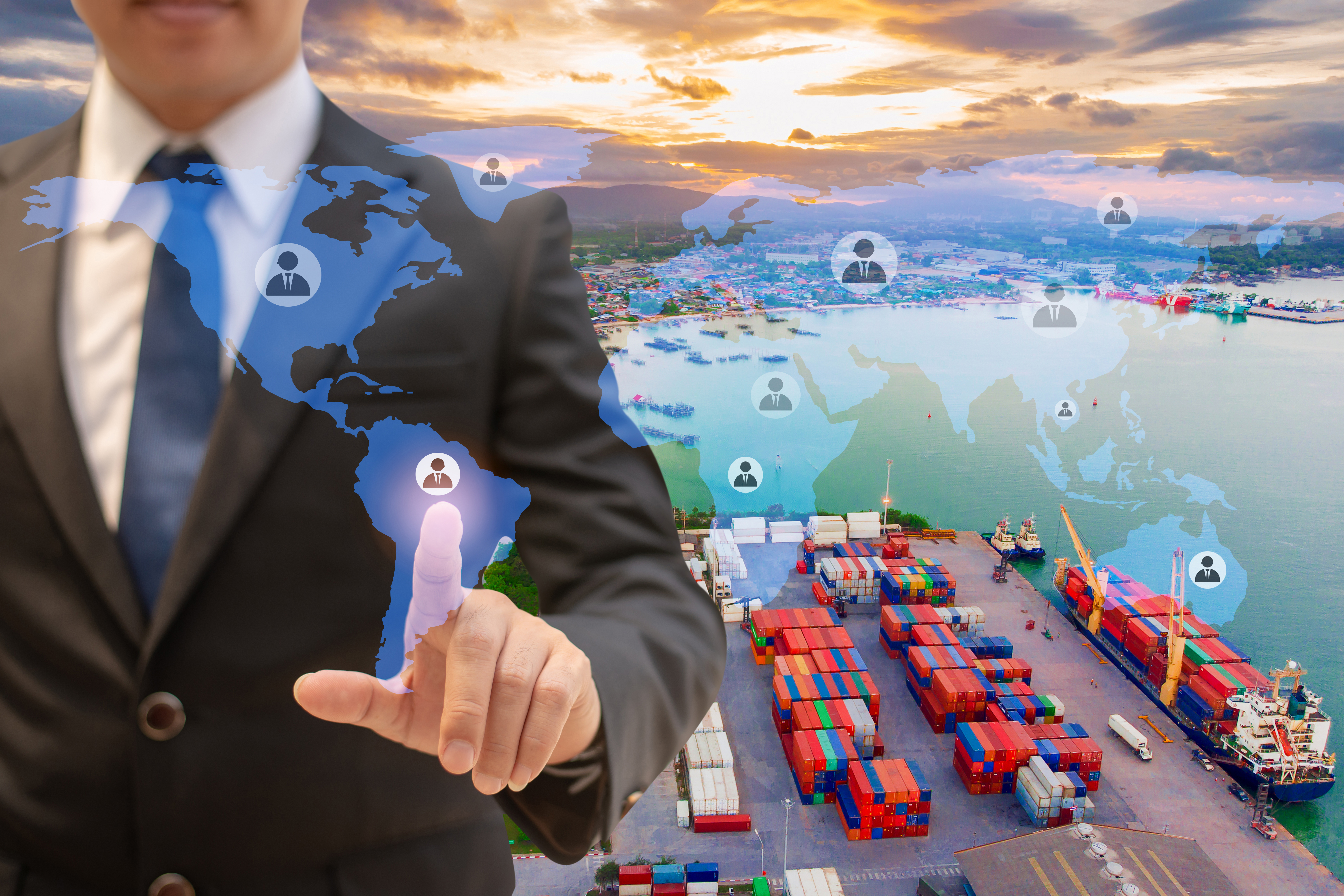
The most ambitious SMEs today aren’t thinking in city limits. They’re thinking in shipping corridors, regional trade routes, and global demand.
In 2026, the question is no longer whether a small business can scale internationally, but how fast it can build the infrastructure to do so. And increasingly, the answer begins in the UAE’s Free Zones.
What was once seen as a regional business setup option has quietly evolved into something far more strategic: a globally connected export platform.
For SMEs with cross-border ambitions, UAE Free Zones are becoming the launchpads of choice.
This blog covers:
- The Export-Driven SME Era Has Arrived
- Why UAE Free Zones Are Built for Export Businesses
- Logistics Networks: The Competitive Advantage Behind the Numbers
- The Role of Unified Licensing and Free Zone Council Modernisation
- Trade Agreements Are Expanding Export Reach Beyond the GCC
- Free Zones as Global Launch Infrastructure, Not Just Location Choices
- FAQs
- Final Thought
The Export-Driven SME Era Has Arrived
Global trade is being reshaped by smaller players entering international markets faster than ever. But few countries have built the enabling environment as deliberately as the UAE.
In 2025, the UAE achieved a historic milestone:
- Non-oil foreign trade surpassed AED 3.8 trillion (USD 1.03 trillion) representing a 27% increase over 2024
- Non-oil exports surged by over 45%, exceeding AED 813 billion
- Re-exports climbed to AED 830 billion, up nearly 16% year-on-year
These are not incremental gains. They reflect a structural shift toward an export-led, globally integrated economy, one that Free Zones are uniquely designed to support.
For SMEs, this matters because trade growth at this scale creates something rare: a national ecosystem where international expansion is no longer exceptional; it is increasingly standard.
Why UAE Free Zones Are Built for Export Businesses
Free Zones were never designed to serve only local commerce. Their core purpose has always been international.
For SMEs focused on trading, distribution, or cross-border services, UAE Free Zones provide structural advantages that are difficult to replicate elsewhere:
- 100% foreign ownership
- Streamlined import-export frameworks
- Simplified company formation for trading activity
- Efficient customs processes for re-export models
- Tax-efficient structures through Designated Free Zone mechanisms
But the real story is how Free Zones align with the UAE’s export trajectory. What’s more, the UAE’s trade ecosystem complements these benefits. The UAE ranks among the top four globally in merchandise exports per capita, a rare achievement for a diversified trade economy.
This kind of momentum signals something important: Free Zones are not peripheral to UAE trade growth. They are central to it.
Logistics Networks: The Competitive Advantage Behind the Numbers
For export-driven businesses, logistics is not a cost center. It is the growth engine.
The UAE’s Free Zones connect SMEs directly to:
- Major seaports linking East-West trade lanes
- Airports enabling time-sensitive cargo movement
- GCC distribution corridors
- Warehousing and bonded storage ecosystems built for scale
This is why the UAE continues to strengthen its position as a global SME trade hub.
Trade relationships under new CEPA frameworks are accelerating this further. For example:
- UAE–India non-oil trade reached nearly USD 38 billion in 2025, up 34% year-on-year
For SMEs exporting consumer goods, electronics, speciality products, or industrial inputs, these logistics corridors transform the UAE into something more than a location, it becomes a global distribution platform.
The Role of Unified Licensing and Free Zone Council Modernisation
What makes this moment particularly significant is that UAE Free Zones are entering a new phase of coordination and maturity.
Across the country, broader Free Zone Council initiatives are pushing toward:
- Unified licensing platforms
- Digitised compliance and trade documentation
- Regulatory harmonisation
- Faster approvals for commercial and export activities
- Interoperable frameworks supporting multi-market access
This signals something important for investors and SME founders: Free Zones are no longer operating as isolated jurisdictions, they are becoming part of a nationally integrated trade strategy.
For export-oriented businesses, that translates into lower friction, faster scalability, and stronger regulatory clarity.
Trade Agreements Are Expanding Export Reach Beyond the GCC
Another defining trend shaping 2026 and beyond is the UAE’s aggressive expansion of trade partnerships.
Recent CEPAs are widening the export runway for SMEs:
- The UAE–Vietnam CEPA, entering force in late 2025, opens new manufacturing and Southeast Asia trade pathways
- The UAE–Jordan CEPA, effective May 2025, is expected to accelerate trade flows across pharmaceuticals, logistics, and industrial goods
For SMEs, these agreements do more than reduce tariffs. They reduce the structural barriers to entering new markets and Free Zones are the operational base that allows firms to capture those openings quickly.
Free Zones as Global Launch Infrastructure, Not Just Location Choices
The most important mindset shift for SME founders is this: A Free Zone isn’t just where you register a company, it’s where you build export infrastructure.
In an era where SMEs can scale globally within months, the jurisdiction you choose becomes your first international strategy decision.
The UAE’s Free Zones offer:
- Trade acceleration backed by real volume growth
- Strong logistics networks for cross-border legitimacy
- Regulatory and tax efficiency, digital access, and lower time-to-market
- Expansion possibilities without bureaucratic drag for regional scalability
For export-oriented entrepreneurs, this is the foundation that turns local ambition into international execution.
FAQs
How do UAE Free Zones support export businesses?
UAE Free Zones provide streamlined licensing, customs advantages, and access to logistics networks that make exporting and re-exporting significantly easier for SMEs.
Are UAE Free Zones good for SME global expansion?
Yes. Free Zones are specifically structured to help SMEs scale internationally through trade-friendly regulations, foreign ownership, and proximity to major shipping routes.
What is the advantage of a Designated Free Zone for exporters?
Designated Free Zones like UAQ Free Trade Zone can offer tax and compliance efficiencies for businesses engaged in qualifying trading and export activities, making them attractive for international scale-up.
Do Free Zones provide logistics and warehousing support?
Many UAE Free Zones are integrated into modern logistics ecosystems, offering warehousing, distribution, and transport connectivity to global markets.
Why are investors looking at emerging Free Zones like UAQ FTZ?
New-generation Free Zones such as UAQ FTZ combine cost efficiency, faster setup, and strong trade connectivity — ideal for SMEs scaling beyond borders.
Final Thought
For companies looking to build an export-ready presence in the UAE, UAQ FTZ provides the infrastructure, licensing flexibility, and operational efficiency to support international scale.
Connect with our business experts to map the right licensing and trade structure for your growth plan.